
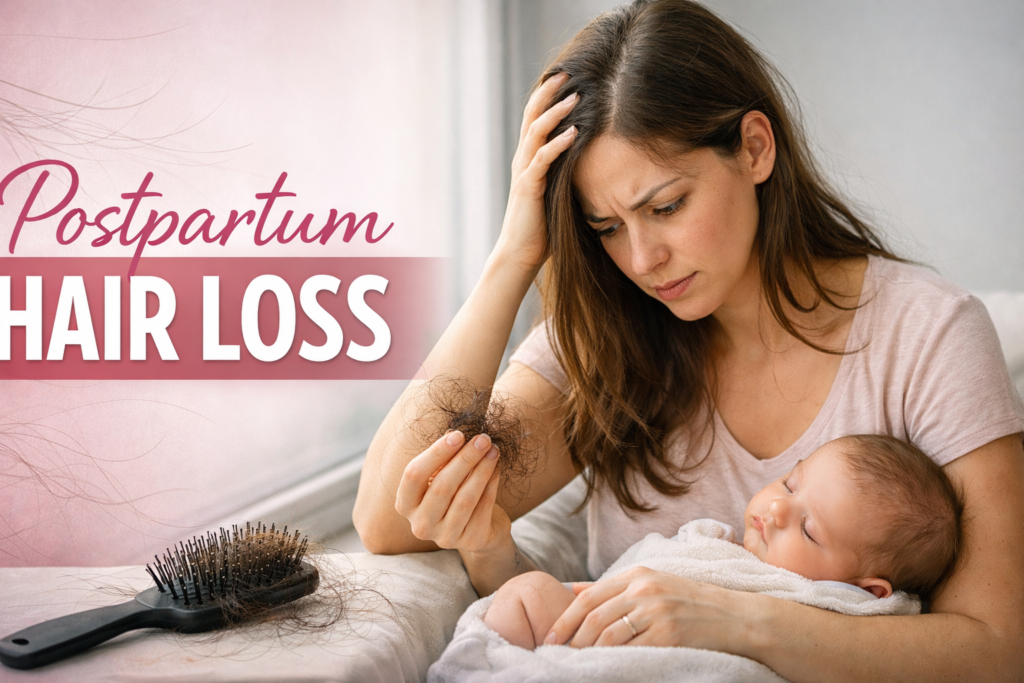
Every new mom expects changes after childbirth, but postpartum hair loss often comes as a surprise. You may notice more hair strands falling out in the shower or on your pillow. For many women, this shedding feels alarming—especially after enjoying thicker hair during pregnancy. Understanding why it happens, how long it lasts, and what you can do can make this stage easier to manage.
What Causes Postpartum Hair Loss?
During pregnancy, high levels of estrogen slow your hair’s normal shedding cycle. Hair stays longer in the growth phase (anagen) and looks fuller. After delivery, estrogen drops, and your body returns to its usual hair cycle. The sudden change pushes more hair into the resting phase (telogen), leading to noticeable shedding.
This process is called telogen effluvium, a temporary form of hair loss. It’s not permanent, but the timing and severity can vary from person to person.
When Does Postpartum Hair Loss Start And Stop?
Most mothers see hair loss begin two to four months after childbirth. The shedding often peaks at the four-month mark, then slowly decreases.
Here’s a quick comparison of postpartum hair loss timelines:
| Stage | Timeline | What to Expect |
|---|---|---|
| Early Postpartum | 0-2 months | Minimal hair loss |
| Active Shedding | 2-4 months | Noticeable hair loss |
| Recovery | 6-12 months | Hair regrowth begins |
Most women find their hair returns to normal between six to twelve months postpartum. If shedding lasts longer or your hair seems much thinner, talk to a doctor. Conditions like thyroid disorders or iron deficiency can also cause hair loss.
How Much Hair Loss Is Normal?
On average, people lose 50-100 hairs per day. During postpartum shedding, this number can double or triple. You may see clumps in your brush or shower drain.
Here’s a comparison of normal vs. postpartum hair loss:
| Type | Daily Hair Loss | Visual Signs |
|---|---|---|
| Normal | 50-100 hairs | Few strands |
| Postpartum | 150-300 hairs | Large clumps |
While this can be distressing, it’s important to know the process is temporary and most hair will regrow.
Can You Prevent Or Reduce Postpartum Hair Loss?
There’s no magic solution to stop postpartum hair loss completely, since it’s linked to hormone changes. However, you can take steps to minimize its impact:
- Eat a balanced diet: Include protein, iron, and vitamins like biotin and vitamin D.
- Be gentle with your hair: Use a wide-tooth comb, avoid tight hairstyles, and minimize heat styling.
- Choose mild shampoos: Harsh chemicals can weaken hair further.
- Try volumizing products: These can make hair look fuller.
- Keep stress in check: High stress can worsen hair loss.
Some women find supplements helpful, but always check with your doctor before starting new vitamins.
Signs Something Else May Be Wrong
Postpartum hair loss is usually harmless, but there are warning signs you shouldn’t ignore:
- Hair loss lasting longer than one year
- Bald patches or uneven thinning
- Other symptoms like fatigue, weight changes, or skin issues
If you notice these, seek medical advice. Thyroid problems, anemia, or other health issues could be the cause.
Real Experiences: What Moms Say
Many moms share that postpartum hair loss feels frustrating but improves with time. Some report thicker hair by their child’s first birthday, while others experience slower recovery.
One non-obvious insight: Hair regrowth often starts as fine, wispy hair around the hairline. This “baby hair” can be a sign your shedding phase is ending.
Another insight: The shedding may be more intense after your second or third child, but not always. Each pregnancy affects hair differently.
Tips For Managing Postpartum Hair Loss
You can make this phase easier by adjusting your hair care routine:
- Use a silk pillowcase to reduce friction.
- Avoid hairstyles that pull on the scalp (tight buns, ponytails).
- Consider a shorter haircut if shedding bothers you.
Many salons offer styles that add volume or hide thinning spots. If you’re unsure, ask a stylist for advice tailored to your hair type.
Is Postpartum Hair Loss Different For Everyone?
Yes. Genetics, age, nutrition, and stress levels all play a role. For example, women with naturally thick hair may notice less thinning, while others see dramatic changes.
Here’s a simple comparison of factors that influence hair loss:
| Factor | Impact |
|---|---|
| Genetics | Determines hair thickness and recovery speed |
| Diet | Low iron or protein can worsen shedding |
| Stress | High stress may prolong hair loss |
| Age | Older moms may see slower regrowth |
If you want more scientific details, check out this resource from the American Academy of Dermatology.
Frequently Asked Questions
How Long Does Postpartum Hair Loss Last?
Most women experience shedding for six to twelve months after childbirth. Hair usually returns to normal by the baby’s first birthday.
Can Breastfeeding Affect Postpartum Hair Loss?
Breastfeeding doesn’t cause hair loss directly, but hormone changes during breastfeeding may delay the return to your normal hair cycle.
Should I Be Worried If My Hair Is Falling Out In Clumps?
Losing hair in clumps is common during postpartum shedding. If you see bald spots, contact your doctor to rule out other conditions.
Are There Treatments For Postpartum Hair Loss?
No specific treatment is needed, as the condition is temporary. Focus on good nutrition and gentle hair care.
Will My Hair Grow Back After Postpartum Hair Loss?
Yes. For most women, hair regrows completely within a year. Some notice new “baby hairs” around the hairline as a sign of recovery.
Postpartum hair loss can feel overwhelming, but knowing what to expect helps you worry less. The shedding is temporary, and your hair will bounce back with time. Take care of yourself, stay patient, and reach out for help if your hair loss seems unusual.