
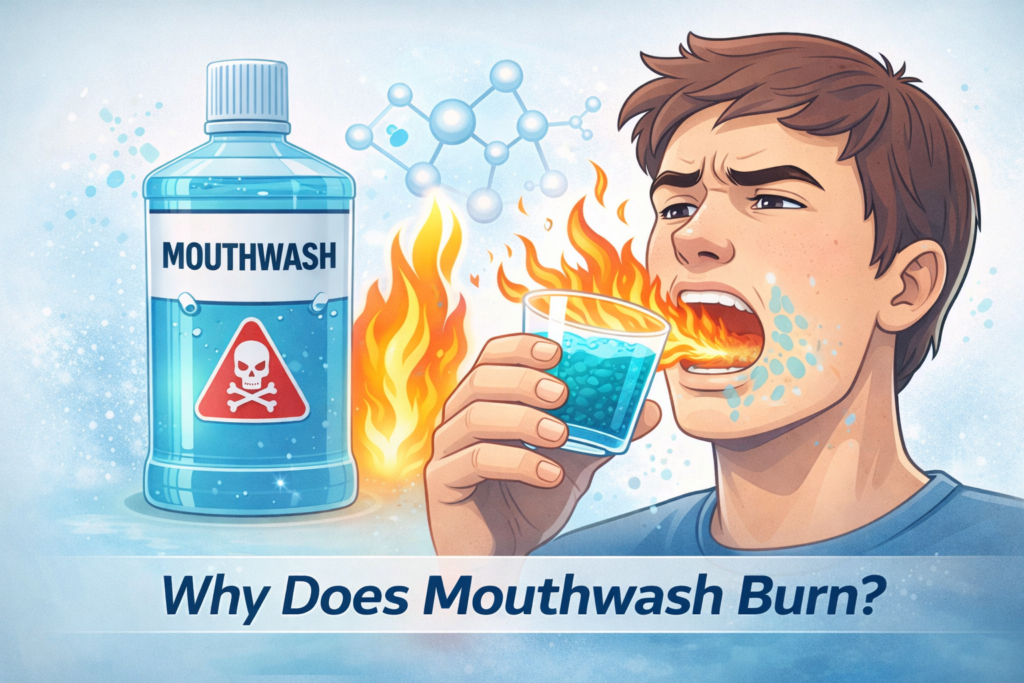
Many people feel a burning sensation when they use mouthwash. But why does mouthwash burn? This feeling can be uncomfortable and confusing. Some think the burning means the mouthwash is working. But that is not always true. In this article, we will explain why mouthwash burns and what you can do about it.
What Is Mouthwash?
Mouthwash is a liquid used to rinse your mouth. It helps clean your teeth and gums. Mouthwash can kill germs that cause bad breath and help keep your mouth healthy. People use mouthwash after brushing and flossing. But sometimes, mouthwash causes a burning feeling. This can make using it hard or unpleasant.
Why Does Mouthwash Burn?
Mouthwash burns mainly because of its ingredients. Some ingredients can irritate the soft tissues inside your mouth. These tissues are very sensitive. When they get dry or hurt, they feel a stinging or burning sensation. Let’s look at the main reasons why mouthwash burns:
Key Ingredients Causing The Burn
- Alcohol: Many mouthwashes have alcohol. Alcohol helps kill germs. But it also dries out your mouth. This dryness makes your mouth feel sore and sting.
- Menthol: Menthol gives a fresh, cool feeling. But it can sting if your mouth is sensitive.
- Hydrogen Peroxide: This is used to clean and whiten teeth. It releases oxygen bubbles that can irritate the mouth.
- Essential Oils: Oils like eucalyptus and thyme can cause burning in some people.
- Chlorhexidine: A strong antiseptic in some mouthwashes. It can cause burning or allergic reactions for some users.
How These Ingredients Cause Burning
Alcohol dries your mouth. When your mouth is dry, it loses its protective layer. This makes your gums and cheeks more sensitive. Menthol and essential oils can sting the soft tissues. Hydrogen peroxide can cause tiny bubbles that irritate the skin inside your mouth. Chlorhexidine is strong and can cause burning if your mouth is already sore.
Who Feels the Burning More?
Not everyone feels the burn the same way. Some people have more sensitive mouths. Certain conditions can make the burning worse. Here are some factors that increase mouth sensitivity:
Factors That Increase Sensitivity
- Mouth Ulcers (Canker Sores): These are small wounds inside your mouth. They hurt a lot when they touch irritants like mouthwash.
- Gum Inflammation or Disease: When gums are swollen or sick, they feel more pain from mouthwash ingredients.
- Dry Mouth: If your mouth does not make enough saliva, it feels dry. Dry mouths get irritated more easily by mouthwash.
Is Burning a Sign That Mouthwash Works?
Many people think the burn means the mouthwash is killing germs. But burning is not a sign of success. Mouthwash can clean your mouth without pain. The burning can come from irritation, not from good cleaning. It is okay to use mouthwash that feels gentle and fresh without burning.
What Can You Do If Mouthwash Burns?
If your mouthwash burns, you can try some simple steps to feel better. Here are some tips:
Steps To Reduce Mouthwash Burning
- Switch to Alcohol-Free Mouthwash: Many mouthwashes do not have alcohol. These are less likely to dry your mouth or cause pain.
- Look for Gentler Formulas: Choose mouthwashes made for sensitive mouths. They have fewer strong ingredients.
- Use Mouthwash Less Often: If your mouth is sore, use mouthwash only once a day or every other day.
- Rinse with Water After Mouthwash: This can help remove some of the irritants from your mouth.
- Check for Mouth Problems: If you have sores or gum disease, see a dentist. They can give advice or medicine to help.
How to Use Mouthwash Correctly
Using mouthwash the right way can help avoid burning. Follow these steps:
- Brush and floss your teeth first.
- Pour the right amount of mouthwash, usually 20 ml.
- Swish it around your mouth for 30 seconds to one minute.
- Do not swallow the mouthwash.
- Spit it out completely.
- Do not rinse with water right after, unless your mouth feels too dry.
Do not use mouthwash right after brushing. It can wash away the fluoride from your toothpaste.
Check the Label Before Buying
Always read the label on your mouthwash bottle. Look for these words:
- “Alcohol-Free” if you want less burning.
- Active ingredients like chlorhexidine or hydrogen peroxide.
- Warnings about possible irritation or allergies.
Knowing what is in your mouthwash helps you avoid strong chemicals. It also helps you choose the best product for your mouth.
Summary Table: Ingredients and Effects
| Ingredient | Purpose | Why It Burns |
|---|---|---|
| Alcohol | Kills germs | Dries mouth, causes stinging |
| Menthol | Freshens breath | Stings sensitive tissue |
| Hydrogen Peroxide | Cleans, whitens | Oxygen bubbles irritate mouth |
| Essential Oils | Antiseptic, flavor | Can cause burning in some users |
| Chlorhexidine | Strong antiseptic | May cause burning or allergies |
Final Thoughts
Mouthwash is helpful for oral health. But the burning feeling is not necessary. It comes from strong ingredients that irritate your mouth. You can find mouthwashes that clean without pain. If your mouth hurts, try alcohol-free or gentle formulas. Always follow the directions on the bottle. If problems last, see your dentist. They can help you find the right mouthwash for you. Healthy mouths do not need to burn.
Frequently Asked Questions
Does Mouthwash Burn Mean It’s Working?
A burning mouthwash sensation mainly comes from alcohol and strong ingredients irritating sensitive tissues. Burning doesn’t always mean it’s effective. Choose alcohol-free or gentle formulas to avoid discomfort. Consult a dentist for persistent burning or oral issues. Mouthwash works best without pain or burning.
Why Do Dentists Say Not To Use Mouthwash?
Dentists warn against mouthwash use right after brushing because it washes away protective fluoride from toothpaste. Alcohol and strong ingredients can irritate sensitive gums and mouth tissues, causing burning and dryness. Choosing alcohol-free, gentle formulas helps prevent discomfort and supports better oral health.
Why Does My Mouth Burn When I Gargle Mouthwash?
Mouthwash burns due to alcohol and strong ingredients like menthol or hydrogen peroxide. Sensitive gums, ulcers, or dry mouth increase irritation. Choose alcohol-free or gentle formulas to reduce burning. Consult your dentist for persistent discomfort or underlying issues.
Why Do You Have To Wait 30 Minutes After Using Mouthwash?
Wait 30 minutes after mouthwash to let fluoride from toothpaste absorb and protect teeth fully. Rinsing too soon reduces effectiveness.