
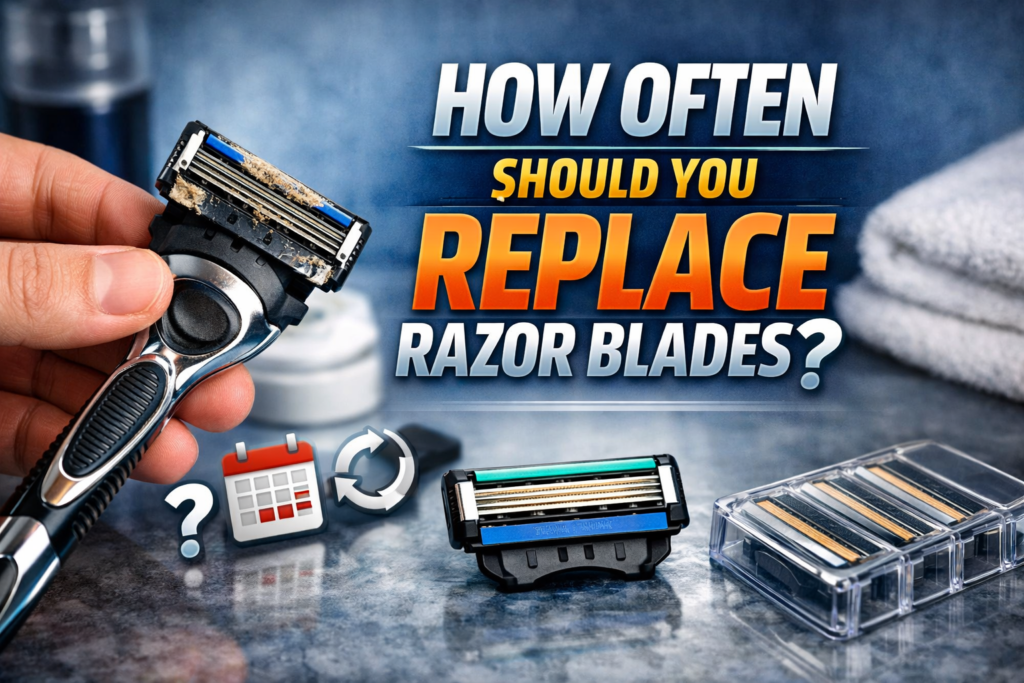
How Often Should You Replace Razor Blades?
Shaving is a routine for millions, but many people are unsure about one simple question: How often should you replace razor blades? Using a dull blade can lead to skin irritation, poor shave quality, and even infections. But changing blades too often feels wasteful and expensive. Finding the right balance is important for both your skin and your wallet.
Why Razor Blade Replacement Matters
A fresh razor blade gives a cleaner shave and helps prevent skin problems. When blades get dull, they tug at hairs instead of slicing smoothly. This causes nicks, razor burn, and sometimes even ingrown hairs. According to dermatologists, using a sharp blade is one of the best ways to avoid these issues.
Most people don’t realize that bacteria can collect on old blades, especially if they’re stored in humid bathrooms. That’s why changing blades regularly isn’t just about comfort—it’s about hygiene.
How Often Should You Change Razor Blades?
There’s no single answer, but several factors affect blade life:
- Type of razor: Disposable, cartridge, or safety razor
- Hair thickness and density
- Shaving frequency
- Skin sensitivity
- Maintenance and storage
A common rule is to replace blades every 5-10 shaves. For many, this means every 1-2 weeks. But let’s break it down further.
| Razor Type | Average Blade Life | Best for |
|---|---|---|
| Disposable Razor | 3-7 shaves | Travel or infrequent use |
| Cartridge Razor | 5-10 shaves | Daily shaving |
| Safety Razor | 7-10 shaves | Thicker hair, sensitive skin |
If you shave daily and have thick facial hair, you’ll need to change blades more often. For example, men with coarse beard hair often notice the blade feels rough after just 5 uses. Women shaving legs or underarms may get more shaves per blade, but not always.
Signs It’s Time To Replace Your Blade
It’s easy to miss the warning signs. Here are some clear indicators:
- Pulling or tugging: If you feel the razor pulling at your hair, the blade is dull.
- Razor burn or irritation: Redness and bumps can mean the blade is past its prime.
- Missed spots: If you have to go over the same area several times, it’s time for a new blade.
- Rust or discoloration: Any change in color means bacteria may be present.
- Unpleasant odor: Smell is a sign of bacteria buildup.
Many beginners ignore these signs, leading to discomfort and skin issues.
Factors That Affect Blade Lifespan
Several things can change how long your razor blades last:
- Shaving technique: Pressing too hard wears blades faster. Use light, short strokes.
- Water quality: Hard water can dull blades quicker due to mineral deposits.
- Blade care: Rinse thoroughly and dry after use. Never leave it wet.
- Storage: Keep razors dry and away from humidity. Storing in a closed cabinet helps.
| Factor | Impact on Blade Life |
|---|---|
| Shaving Frequency | Daily shaving shortens blade life |
| Hair Type | Thicker hair dulls blades faster |
| Blade Quality | Premium blades last longer |
| Storage Method | Dry storage increases blade life |
A non-obvious tip: If you rinse your razor in hot water, it helps remove oil and residue. But always dry it afterward—moisture is the enemy.
Comparing Brands And Blade Quality
Not all razor blades are equal. Some brands use better steel or sharper edges. Higher quality blades can last longer, but they also cost more.
| Brand | Blade Longevity | Average Price (per blade) |
|---|---|---|
| Gillette | 8-10 shaves | $2.50 |
| Schick | 7-9 shaves | $2.00 |
| Feather | 6-8 shaves | $1.20 |
| Personna | 5-7 shaves | $1.00 |
Some beginners believe that more expensive blades always last longer, but technique and care matter just as much as price.
Practical Tips For Maximizing Blade Life
You can make your blades last longer with a few simple habits:
- Rinse well after each shave: Removes hair and shaving cream.
- Dry the blade: Pat with a towel or use a hair dryer.
- Store upright: Prevents moisture buildup.
- Avoid sharing razors: Reduces bacteria and contamination.
- Use shaving cream or gel: Reduces friction and blade wear.
A practical insight: Try stropping your blade on jeans (just a few strokes). This can restore sharpness for a couple more shaves.
Frequently Asked Questions
How Do I Know When My Razor Blade Needs Replacing?
If you feel pulling, notice irritation, or see rust, it’s time to change your blade. These signs show the blade is dull or contaminated.
Can Using Dull Blades Cause Skin Problems?
Yes. Dull blades can cause razor burn, nicks, and sometimes ingrown hairs. Bacteria buildup on old blades can lead to infections.
Are Expensive Razor Blades Worth The Money?
Higher quality blades often last longer and feel smoother. But blade lifespan also depends on your shaving habits and care. Sometimes, a lower-priced blade can work well if you shave less often and maintain it properly.
How Can I Make My Razor Blades Last Longer?
Use proper technique, rinse and dry after every shave, and store them in a dry place. Avoid pressing too hard and always use shaving cream.
Is It Safe To Use Someone Else’s Razor?
No. Sharing razors can spread bacteria and viruses. Always use your own blade for hygiene and safety.
Shaving should be comfortable and safe. By paying attention to your razor blade’s condition and replacing it regularly, you protect your skin and get a better shave. For more expert advice on shaving, visit Wikipedia. Remember, your skin deserves the best—don’t let a dull blade ruin your routine.