
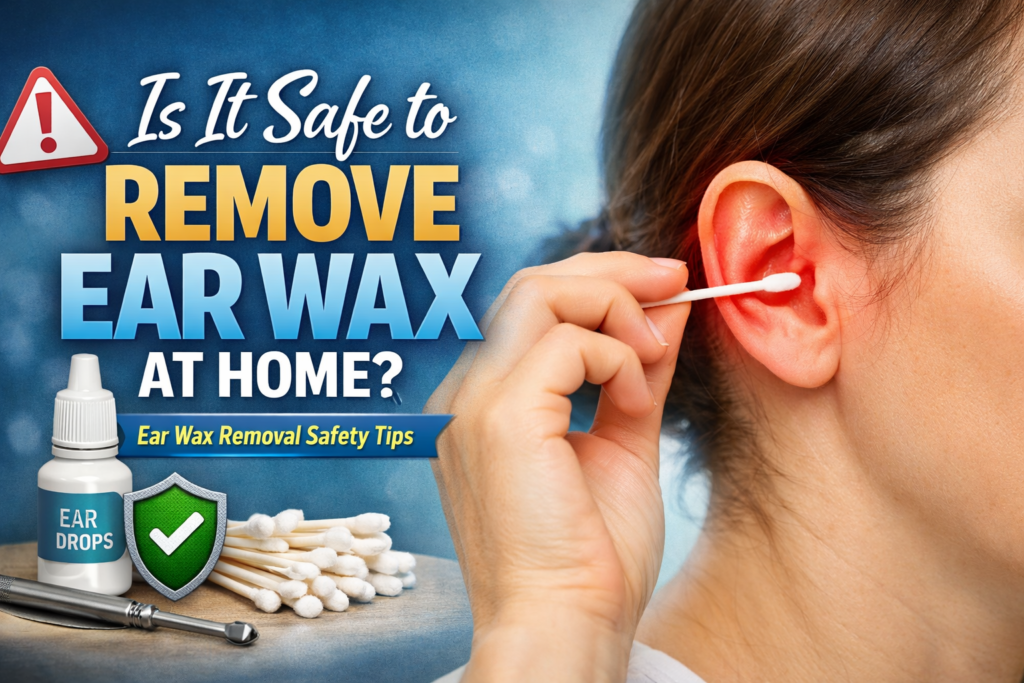
Removing ear wax at home is something many people do, but is it truly safe? Ear wax, also called cerumen, is a natural substance produced by the body. It protects your ear canal from dust, bacteria, and other harmful things. Sometimes ear wax builds up and causes discomfort, hearing problems, or itching. While it may seem easy to fix the problem yourself, there are important risks and facts you should understand before trying to remove ear wax at home.
Why Does Ear Wax Build Up?
Most people have a small amount of ear wax that clears itself naturally. However, excessive ear wax can happen because of:
- Using cotton swabs or earbuds frequently
- Wearing hearing aids or ear plugs
- Narrow or hairy ear canals
- Aging (older adults produce drier wax)
- Skin conditions (like eczema)
According to the American Academy of Otolaryngology, about 10% of children and 5% of adults experience significant wax buildup. For older adults, this number can reach up to 30%. Sometimes, ear wax can even block your hearing completely.
Common At-home Ear Wax Removal Methods
People use several methods to remove ear wax at home. Some are safer than others. Here’s a comparison of common methods:
| Method | Safety Level | Effectiveness | Main Risk |
|---|---|---|---|
| Cotton swabs | Low | Poor | Pushing wax deeper |
| Ear drops | High | Good | Allergic reaction |
| Ear syringing | Medium | Moderate | Ear canal injury |
| Ear candles | Very low | Poor | Burns, blockage |
Cotton swabs are the most common tool, but experts strongly warn against their use. Swabs often push the wax deeper and may damage the ear canal or eardrum.
Ear drops, usually made from hydrogen peroxide or mineral oil, help soften wax so it can come out naturally. These are considered much safer when used as directed.
Ear syringing uses a bulb or device to flush water into the ear. This can work, but incorrect use may cause pain or injury.
Ear candles claim to draw out wax using heat and suction, but studies show they are not effective and may cause burns or blockages.
Risks Of Removing Ear Wax At Home
Trying to remove ear wax at home can lead to several problems. Some risks are obvious, but others are less known:
- Ear canal injury: Poking inside the ear can scratch the delicate skin, leading to infection.
- Eardrum damage: A deep poke with a swab or sharp object can rupture the eardrum. This may cause hearing loss.
- Wax impaction: Instead of removing the wax, you might push it deeper, blocking your hearing even more.
- Infection: Damage or leftover wax can create a moist environment for bacteria, leading to painful infections.
- Dizziness or ringing: Water, drops, or injury can make you feel dizzy or cause tinnitus (ringing in the ear).
Here is a quick comparison between professional removal and home methods:
| Aspect | Professional Removal | At-Home Removal |
|---|---|---|
| Safety | High | Low-Medium |
| Effectiveness | Excellent | Variable |
| Risk of injury | Rare | Common |
| Cost | Higher | Lower |
Safe At-home Ear Wax Removal Tips
If you decide to try ear wax removal at home, follow these practical tips to reduce risk:
- Use ear drops made for wax removal. Read instructions carefully.
- Tilt your head to let drops stay in your ear for several minutes.
- Rinse gently with warm water using a bulb syringe if recommended.
- Dry your ear completely after rinsing.
- Never use sharp objects, cotton swabs, or ear candles.
- Stop immediately if you feel pain, dizziness, or hearing loss.
A non-obvious tip: Some people have allergies to certain ear drops (like hydrogen peroxide). If you have sensitive skin, test on a small area first or choose mineral oil drops.
Another insight: If you wear hearing aids or ear plugs, check for wax buildup more often. Devices can push wax deeper and cause faster buildup.
When You Should See A Doctor
You should visit a professional if:
- You feel pain, dizziness, or hearing loss after trying to remove wax
- You see blood or discharge coming from your ear
- Home methods do not work after several days
- You have ear tubes or had ear surgery
- You have diabetes or a weakened immune system
Doctors use special tools and microscopes to remove wax safely. Sometimes, they use suction or gentle scraping. This is much safer than home tools.
According to the Mayo Clinic, professional removal is recommended for people with recurring wax buildup, children, or anyone with ear problems. You can find more details at Mayo Clinic.
Frequently Asked Questions
How Often Should I Clean My Ears?
Most people do not need to clean their ears often. The ear naturally cleans itself. Only clean if you notice blockage or discomfort.
Are Cotton Swabs Safe For Ear Wax Removal?
No. Cotton swabs can push wax deeper and cause injury. It is best to avoid using them inside the ear canal.
Can Ear Drops Cause Allergies?
Yes. Some ear drops contain chemicals that may irritate sensitive skin. Always read the ingredients and test first if you have allergies.
What Are Signs Of Ear Wax Blockage?
Common signs include hearing loss, earache, itching, dizziness, and ringing in the ear. Severe cases may cause infection and discharge.
Is Ear Candling Safe?
No. Ear candling is not proven to work and can cause burns or blockages. Doctors advise against this method.
Removing ear wax at home can be safe if you use proper methods and take precautions. Still, the risks are real—especially if you use unsafe tools or have underlying conditions. If you are unsure, or if symptoms persist, it is always best to seek help from a medical professional.
Your hearing is precious; protect it with care.