
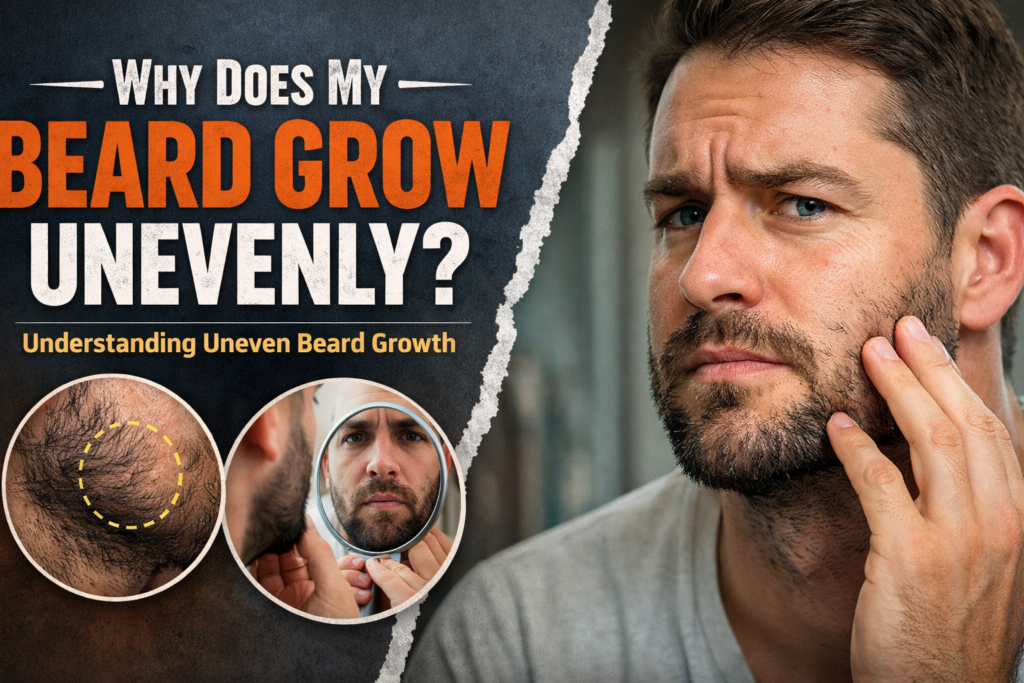
Why Does My Beard Grow Unevenly?
Many men dream of having a full, even beard. But for many, the mirror shows something different: patches, thin spots, and uneven growth. If you’re asking, “Why does my beard grow unevenly?” you’re not alone. This is a common concern, especially for men in their 20s and 30s. Let’s look at the reasons behind uneven beard growth, what you can do about it, and when you should just let nature take its course.
Main Causes Of Uneven Beard Growth
Uneven beard growth can be frustrating, but it’s usually not a sign of a health problem. Here are the top reasons:
1. Genetics
Your genes are the biggest factor. Beard hair growth, thickness, and coverage are passed down from your parents. If your father or grandfather had patchy beards, you might too. Some men have high density on the chin and mustache, but thin or patchy cheeks.
2. Age And Hormones
Young men often notice patchy beards. Testosterone and dihydrotestosterone (DHT) are hormones that control facial hair. Beard growth usually improves in your mid-20s to early 30s. It’s common for patches to fill in as you get older.
3. Hair Growth Cycles
Beard hair grows in stages: anagen (growth), catagen (transition), and telogen (rest). Not all hairs are at the same stage. Some hairs may be growing while others are resting or shedding, making your beard look uneven.
4. Skin Conditions
Issues like alopecia areata, fungal infections, or eczema can affect how hair grows. These can cause round bald patches or slow growth in certain areas.
5. Lifestyle And Nutrition
Your body needs nutrients like biotin, zinc, and protein to grow strong hair. Poor diet, high stress, or lack of sleep can slow hair growth and make patchiness worse.
6. Bad Grooming Habits
Over-trimming, using harsh products, or pulling at your beard can damage hair and slow growth. Some men even develop bald spots from repetitive pulling, a condition called trichotillomania.
How Uneven Beards Compare
To understand if your beard is truly uneven, it helps to compare normal beard growth patterns. Here’s a simple breakdown:
| Beard Area | Typical Growth Rate | Common Issues |
|---|---|---|
| Chin | Fast | Thick, full growth |
| Mustache | Medium | Gaps under nose |
| Cheeks | Slow | Patches, thin areas |
| Neck | Varies | Random hairs, uneven lines |
Many men notice that cheeks and sideburns are the most patchy areas. This is normal, and often these spots improve with age.
What You Can Do About It
You can’t change your genetics, but you can help your beard look its best.
1. Give It Time
Most patchy beards fill in over time. Let your beard grow for at least 8-12 weeks before judging its true pattern. Early trimming often makes patchiness worse.
2. Eat Well And Manage Stress
Focus on a balanced diet rich in protein, vegetables, and healthy fats. Vitamins like biotin and minerals like zinc support hair growth. High stress can cause hair to shed, so find ways to relax.
3. Use Proper Beard Care
- Wash your beard 2-3 times a week with a gentle cleanser.
- Use beard oil to moisturize skin and hair.
- Brush or comb your beard daily to encourage even growth.
4. Style Smartly
A good beard trimmer can help blend longer and shorter areas. Some men use a fade or keep the beard short to hide thin spots. A skilled barber can suggest styles that work for your growth pattern.
5. Consider Medical Options
If you see round bald spots or sudden changes, see a dermatologist. Treatments like minoxidil (Rogaine) may help some men, but always ask a doctor first.
Common Myths About Patchy Beards
There are many myths about uneven beards. Let’s clear up a few:
- Shaving makes hair grow back thicker. This is false; shaving does not change the growth rate or thickness.
- Beard oils make hair grow faster. Oils help condition hair and skin, but don’t directly speed up growth.
- Everyone can grow a full beard. Not all men can, and that’s normal.
- Patchy beards are a sign of poor health. Usually, they’re just genetics.
Data: Beard Growth Over Time
Understanding how beards change as you age can help set realistic expectations.
| Age Group | Typical Beard Density | Patchiness Level |
|---|---|---|
| 15-20 | Low | High |
| 21-25 | Medium | Medium |
| 26-35 | High | Low |
| 36+ | Stable | Minimal |
Many men who struggled with patchy beards at 20 have full, even beards by 30.
When To See A Doctor
Most uneven beards are normal, but see a professional if you notice:
- Sudden bald spots or rapid hair loss
- Redness, itching, or flaking skin
- Hair loss in other parts of your body
These can signal a medical problem that needs attention.
Surprising Insights Most Men Miss
- Side sleeping can affect beard growth. Constant rubbing on a pillow can slow hair growth on one side.
- Sunburn can damage hair follicles, causing patchy spots.
- Low iron levels sometimes lead to thinner facial hair, not just scalp hair.
Frequently Asked Questions
Why Is My Beard Patchy Only On One Side?
This is often due to sleeping position (friction), genetics, or uneven hormone levels. Over time, both sides usually even out.
Can I Use Minoxidil For Beard Growth?
Minoxidil is used for scalp hair loss but some use it on beards. Talk to a doctor before starting; it’s not FDA-approved for beards and can cause side effects.
Does Shaving Make My Beard Grow Back Thicker?
No, shaving just cuts hair at the skin. Growth rate and thickness come from follicles under the skin, which shaving doesn’t affect.
How Long Should I Wait Before Trimming A New Beard?
Wait at least 8 weeks. This lets slow-growing areas catch up and gives a better idea of your natural beard pattern.
Where Can I Learn More About Beard Growth?
You can read more on the science of beard growth at the Wikipedia Beard page.
A patchy beard can be annoying, but it’s often just a phase. With patience, good care, and the right style, most men can enjoy a beard that suits them. Embrace your unique pattern—you might find it’s more stylish than you think.