
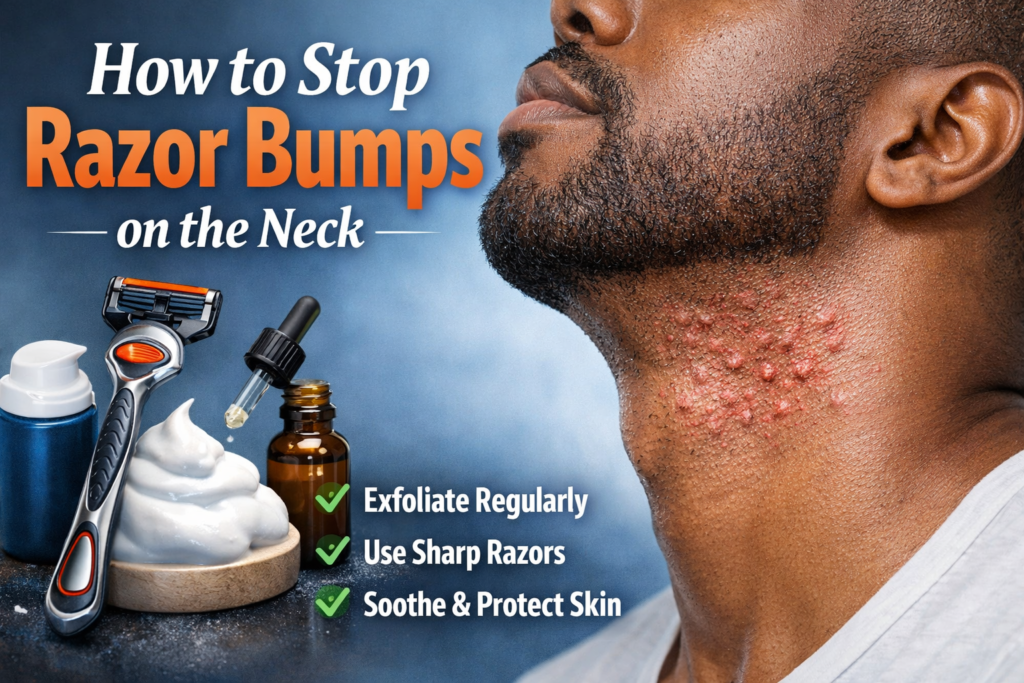
Razor bumps on the neck are more than just a small annoyance. They can cause pain, itching, and even embarrassment, especially if you shave often. Many people think razor bumps are just a normal part of shaving, but with the right techniques, you can avoid them almost completely.
This article will show you how to stop razor bumps on the neck, with practical advice that really works. You’ll also find data, comparisons, and expert tips that are easy to follow, even if English is not your first language.
What Causes Razor Bumps On The Neck
Razor bumps, also known as pseudofolliculitis barbae, happen when shaved hair curls back into the skin. This leads to swelling, redness, and sometimes painful bumps. The neck is especially sensitive because the skin is thinner and the hair often grows in different directions. Shaving too close or with a dull blade increases the risk.
Studies show that up to 60% of men with curly hair experience razor bumps at some point. Women who shave their necks for certain styles or treatments can also get them. You might notice that bumps appear more often after a rushed shave or when using cheap razors.
Step-by-step Guide To Prevent Razor Bumps
Shaving doesn’t have to hurt. Here’s how you can shave your neck safely and avoid razor bumps:
- Prepare the skin: Wash your neck with warm water and a gentle cleanser. This opens pores and softens hair.
- Use shaving cream: Apply a thick layer of shaving cream or gel. Let it sit for 2 minutes before shaving.
- Choose the right razor: Use a single-blade or safety razor. Multi-blade razors often cut hair too short, increasing bumps.
- Shave with the grain: Follow the direction your hair grows. If you’re not sure, run your hand over your neck—feel for the smoothest direction.
- Avoid stretching the skin: Don’t pull your skin tight while shaving. This makes hair retract below the surface.
- Rinse the blade often: Clean your razor after every few strokes. This keeps it sharp and reduces bacteria.
- Moisturize after shaving: Use a fragrance-free moisturizer or aloe vera gel. This calms the skin and lowers irritation.
Common Mistakes Beginners Make
- Using alcohol-based aftershaves: These dry out the skin and make bumps worse.
- Shaving too quickly: Slow, careful strokes are safer.
- Ignoring blade quality: Dull blades tug at hair and increase risk.
Comparing Razor Types For Sensitive Necks
Choosing the right razor can make a big difference. Here’s a comparison of common types for people with sensitive neck skin:
| Razor Type | Pros | Cons |
|---|---|---|
| Single-Blade | Reduces bumps, easy to clean | Requires more skill |
| Multi-Blade | Fast shave, smooth finish | Higher risk of bumps |
| Electric Razor | Quick, less irritation | May miss spots, expensive |
| Safety Razor | Precise, low bump risk | Needs careful handling |
Most experts recommend the single-blade or safety razor for neck shaving, especially if you have curly hair or sensitive skin.
Best Products To Prevent Razor Bumps
Some products work better for preventing razor bumps. Here’s a quick comparison:
| Product | Key Ingredient | How It Helps |
|---|---|---|
| Shaving Gel | Aloe Vera | Soothes, reduces redness |
| Moisturizing Cream | Glycerin | Keeps skin hydrated |
| Aftershave Balm | Witch Hazel | Calms irritation, fights bacteria |
| Exfoliating Scrub | Salicylic Acid | Prevents ingrown hairs |
Look for products without fragrance or alcohol. If you have allergies, test a small amount first.
Advanced Tips And Non-obvious Insights
- Exfoliate regularly: Use a gentle scrub or brush twice a week. This removes dead skin and helps prevent hairs from getting trapped.
- Change blades often: A fresh blade every 5–7 shaves lowers the risk of bumps. Don’t wait until your razor feels dull.
- Try shaving less often: Give your neck at least one day to recover between shaves.
- Hot compress before shaving: Placing a warm towel on your neck for 30 seconds softens hair and opens pores.
- Use a post-shave serum: Some serums are made to prevent ingrown hairs. Look for ingredients like tea tree oil or glycolic acid.
Many beginners miss the importance of hair direction mapping. Each area of your neck can grow hair differently. Take a few minutes to check which way your neck hair grows before shaving.
When To See A Dermatologist
Most razor bumps clear up with good habits, but sometimes you need expert help. If your bumps become painful, infected, or don’t heal after two weeks, see a skin specialist. Prescription creams or laser treatments may help in severe cases.
For more medical insights, visit American Academy of Dermatology.
Frequently Asked Questions
What Are Razor Bumps?
Razor bumps are small, red, irritated spots caused by shaved hair curling into the skin. They often happen on the neck where hair grows in many directions.
How Can I Tell If My Razor Is Too Dull?
If your razor tugs at hair or doesn’t glide smoothly, it’s too dull. Using a dull blade increases the risk of razor bumps.
Are Electric Razors Better For Sensitive Necks?
Electric razors can reduce irritation, but they may miss some hairs. They’re a good option for people who want a quick, less aggressive shave.
Can Women Get Razor Bumps On Their Necks?
Yes, women can get razor bumps if they shave their necks. The same prevention steps work for everyone, regardless of gender.
Is It Safe To Use Aftershave On The Neck?
It’s safe if you use a gentle, alcohol-free aftershave. Avoid products with strong fragrances or alcohol, as these dry out and irritate the skin.
Stopping razor bumps on the neck takes patience and the right approach. By preparing your skin, using the correct razor, and following expert tips, you can enjoy a smooth, comfortable shave. Remember to pay attention to your skin’s needs and avoid common mistakes.
With these strategies, razor bumps can become a thing of the past.