
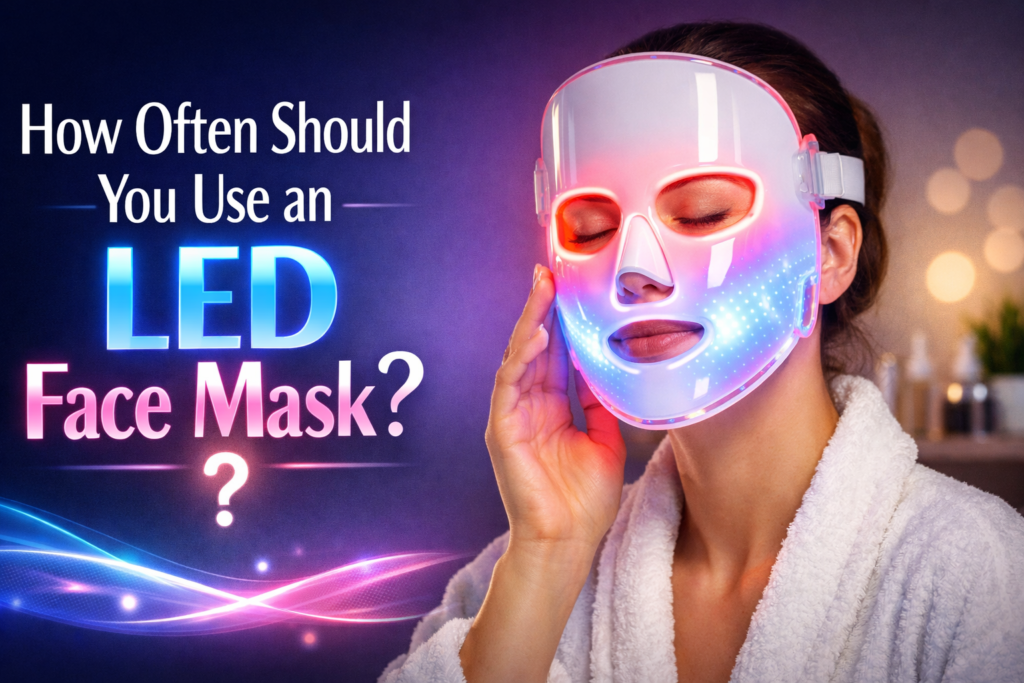
LED face masks are becoming a popular skincare tool for people who want smoother, clearer skin without going to a clinic. These devices use different colors of LED lights to target problems like acne, aging, or redness. But a common question is: How often should you use an LED face mask? Using them too much or too little can affect your results. Let’s break down the science, safety, and best habits to help you get the most out of your LED mask.
How Led Face Masks Work
LED face masks use light-emitting diodes to send light into your skin. Each color reaches different layers and has its own benefits:
- Red light stimulates collagen, helping with wrinkles and fine lines.
- Blue light targets bacteria, making it great for acne.
- Green and yellow lights can reduce redness or hyperpigmentation.
The mask’s settings and colors can be adjusted to match your skin goals. These treatments are gentle and don’t cause pain or peeling, which is why many people use them at home.
Recommended Usage Frequency
Most experts and mask brands suggest using an LED face mask about 3 times per week. Here’s a breakdown of why this is a good starting point:
- Skin needs time to respond: LED therapy works best when your skin has time to heal and rebuild between sessions.
- Results build slowly: You won’t see changes overnight. Improvement happens gradually with consistent use.
- Safety: Using a mask too often might cause irritation or dryness.
Below is a comparison of usage guidelines from popular brands:
| Brand | Recommended Use | Session Length |
|---|---|---|
| Dr. Dennis Gross | 3-5 times/week | 3 minutes |
| CurrentBody Skin | 3 times/week | 10 minutes |
| Neutrogena | Once daily | 10 minutes |
For most people, 3 sessions per week is enough. If you have sensitive skin, start with once or twice a week and see how your skin reacts.
What Affects How Often You Should Use It
Your skin type, the strength of the mask, and your skin goals can change how often you should use an LED face mask.
Skin Type
- Sensitive skin: Begin with one session per week. Increase slowly if there’s no irritation.
- Oily or acne-prone skin: Blue light can be used more often, but still, don’t go over five times a week.
- Normal skin: Three times a week is safe and effective.
Mask Power
Not all masks are the same. At-home masks are weaker than those at a spa or dermatologist’s office. You can use home devices more often, but always follow the instructions.
Your Skin Goals
- Acne treatment: Blue light masks are used up to daily, but only if your skin can handle it.
- Anti-aging: Red light works best with steady, long-term use, such as three times a week.
- General maintenance: Two to three sessions a week are enough for most people.
How To Use An Led Face Mask Safely
To get the best results and avoid problems, follow these steps:
- Cleanse your skin before every session. Remove makeup and sunscreen.
- Wear eye protection if your mask does not have built-in shields.
- Use the mask for the recommended time—never longer.
- Moisturize after to keep your skin hydrated.
- Start slow. If you notice redness or stinging, reduce sessions.
A common mistake is thinking more is better. Overuse can lead to dryness or irritation, especially for sensitive skin.
When To Adjust Your Routine
If you’re not seeing results after 4-6 weeks, you may need to:
- Increase sessions by one per week.
- Try a different color light for your main concern.
- Make sure you’re using the mask on clean, dry skin.
If you get redness, breakouts, or discomfort, take a break for a few days. Some people’s skin needs time to adjust.
Real Results: What To Expect
Many users see clearer skin and a brighter tone in four weeks. Wrinkles and fine lines may take longer to improve—often two to three months of steady use. LED masks are not a fast fix, but they can give lasting benefits when used correctly.
A study published in the Journal of Clinical and Aesthetic Dermatology found that red light therapy improved wrinkles and skin texture in over 70% of participants after 12 weeks. Acne sufferers reported fewer breakouts with regular blue light sessions.
Pros And Cons Compared To Other Treatments
Here’s how LED face masks compare to other popular skincare treatments:
| Treatment | At-Home Use | Side Effects | Results Timeline |
|---|---|---|---|
| LED Face Mask | Yes | Low | 4-12 weeks |
| Chemical Peel | No | Redness, peeling | 1-2 weeks |
| Microdermabrasion | Sometimes | Redness, sensitivity | 1-2 weeks |
LED masks are gentle and easy to use at home, but you need patience to see results.
Tips For Better Results
- Be consistent. Set a schedule and stick to it.
- Don’t use acids or harsh scrubs right before or after a session.
- Clean your mask after each use to prevent bacteria.
- Track your progress with photos.
One non-obvious tip: Don’t skip sessions just because your skin looks better. LED therapy works best with ongoing use, even after you see results.
When To Avoid Led Face Masks
LED masks are safe for most people, but avoid them if you:
- Have epilepsy (flashing lights can be a trigger)
- Are pregnant (consult your doctor first)
- Take medications that cause light sensitivity
- Have open wounds or severe skin conditions
If you’re unsure, check with your dermatologist before starting.
For more on LED therapy safety, see the American Academy of Dermatology.
Frequently Asked Questions
How Long Should Each Led Mask Session Last?
Most at-home LED masks recommend 10–20 minutes per session. Always follow the instructions for your specific device.
Can I Use My Led Face Mask Every Day?
Some masks are safe for daily use, but most experts suggest 3 times per week to avoid irritation. If your skin feels fine, you may increase gradually.
How Soon Will I See Results From Using An Led Face Mask?
You may notice brighter skin in 2-4 weeks. For acne and wrinkles, expect results after 8-12 weeks of regular use.
Do I Need To Wear Eye Protection With My Led Mask?
If your mask doesn’t cover your eyes or if you feel discomfort, wear protective goggles during each session to prevent irritation.
Can I Combine Led Mask Use With Other Skincare Products?
Yes, but avoid strong acids or retinoids right before or after using your mask. Moisturizer and gentle products are safe to use.
LED face masks can transform your skin if you use them the right way and stick to a regular schedule. Start slow, listen to your skin, and be patient—great skin takes time.