
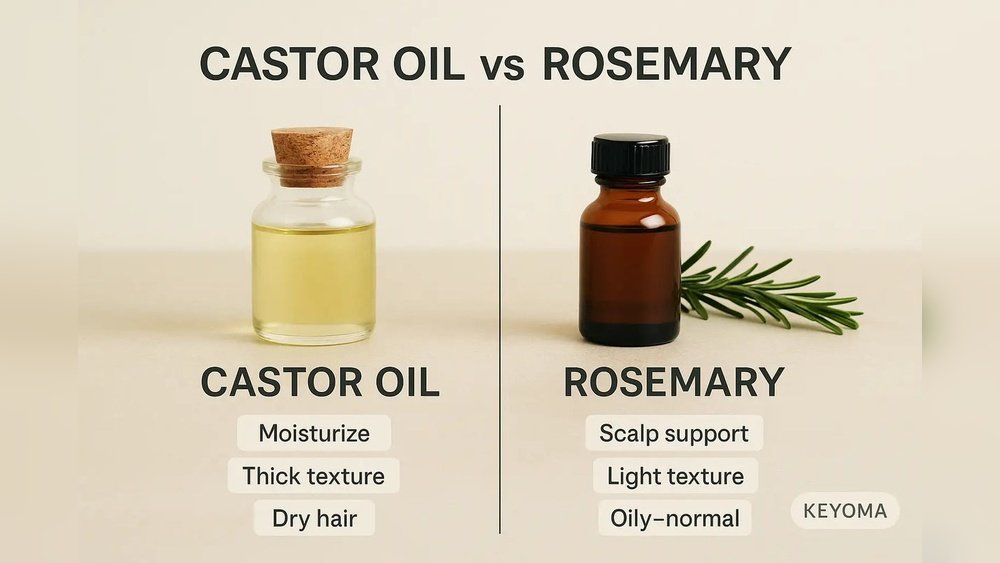
Many people want thicker, healthier hair. Two natural oils often come up: rosemary oil and castor oil. Both are popular for hair growth, but they work in different ways. If you are deciding which one to use, it’s important to understand how they perform, what science says, and how to apply them safely. Let’s compare these oils closely, so you can make the right choice for your hair goals.
What Makes Rosemary Oil Effective?
Rosemary oil comes from the rosemary plant, known for its fresh scent and herbal benefits. This oil contains compounds like cineole and rosmarinic acid, which may help stimulate blood flow to the scalp. Better circulation means more nutrients reach hair follicles, which can encourage growth.
Studies show that rosemary oil can be as effective as minoxidil (a common hair loss treatment) for mild hair thinning. In a 2015 study, people who used rosemary oil saw a significant increase in hair count after six months, similar to those using minoxidil.
Other advantages:
- May reduce scalp inflammation
- Helps prevent dandruff
- Makes hair look shinier and fuller
However, rosemary oil is very concentrated. You should always dilute it with a carrier oil (like coconut or olive oil) before applying.
Why Castor Oil Is Trusted For Hair Growth
Castor oil is made from castor beans and is thicker than most oils. Its main ingredient is ricinoleic acid, which has anti-inflammatory and moisturizing effects. This oil is known for locking in moisture, which reduces breakage and split ends.
Many people use castor oil for eyelashes and eyebrows, but it’s also used on the scalp. Some believe it speeds up hair growth, but scientific evidence is limited. Instead, castor oil is especially good at making hair look fuller by keeping it hydrated and less brittle.
Additional benefits:
- Treats dry scalp and flakiness
- Makes hair softer and easier to detangle
- Protects hair from damage caused by styling tools
One thing to note: castor oil is very sticky and heavy. It can be difficult to wash out and may weigh down fine hair.

Credit: www.youtube.com
Comparing Rosemary Oil And Castor Oil
It’s helpful to look at how these oils stack up side by side. Here is a comparison of their main properties:
| Feature | Rosemary Oil | Castor Oil |
|---|---|---|
| Main Benefit | Stimulates scalp, promotes growth | Hydrates, strengthens hair |
| Texture | Light, easily absorbed | Thick, sticky |
| Best For | Thinning hair, scalp issues | Dry hair, breakage |
| Risks | Possible irritation if undiluted | Can clog pores, heavy feel |
| Scientific Evidence | Strong, multiple studies | Limited, mostly anecdotal |
How To Use These Oils For Hair Growth
Applying oils correctly is key. Here’s a simple step-by-step for each:
Rosemary Oil Application
- Mix 2–3 drops of rosemary oil with a tablespoon of a carrier oil.
- Massage gently into your scalp for 5–10 minutes.
- Leave for at least 30 minutes, then wash out.
- Repeat 2–3 times a week.
Tips:
- Never use pure rosemary oil directly on skin.
- If irritation occurs, stop using.
Castor Oil Application
- Warm a small amount (about 1 tablespoon) of castor oil.
- Rub between your palms and apply to scalp and hair ends.
- Cover hair with a shower cap and leave for 1–2 hours.
- Wash out thoroughly with shampoo.
Tips:
- Use once a week, especially if your hair is fine or oily.
- Mix with lighter oils (like jojoba) for easier application.
Which Oil Is Right For You?
Choosing between rosemary oil and castor oil depends on your hair type and goals. Here are the main points to consider:
| Goal | Best Oil | Why |
|---|---|---|
| Boosting growth | Rosemary Oil | Stimulates follicles, backed by research |
| Thicker appearance | Castor Oil | Hydrates and coats hair, reduces breakage |
| Dealing with scalp issues | Rosemary Oil | Reduces inflammation, helps dandruff |
| Dry, brittle hair | Castor Oil | Seals moisture, softens strands |
Many people combine both oils for a balanced approach. For example, use rosemary oil for scalp massage and castor oil on hair ends.
Non-obvious Insights Most Beginners Miss
- Consistency matters more than quantity. Using a small amount of oil regularly is better than using a large amount once in a while. Hair growth results take months to show.
- Patch testing is important. Both oils can cause allergic reactions. Always test a small area before applying to your whole scalp.
- Diet and stress affect results. Oils help, but poor nutrition or high stress can limit hair growth, no matter which oil you use.

Credit: www.amazon.com
Common Mistakes To Avoid
- Using undiluted rosemary oil, which can cause burning or redness.
- Leaving castor oil on too long, making hair greasy and hard to wash.
- Expecting instant results. Most people see changes after 3–6 months.
Real-world Example
A 28-year-old woman with thinning hair tried rosemary oil massages twice a week. After four months, she reported less hair fall and new growth around her hairline. Her routine included a patch test and mixing rosemary oil with olive oil.
Another person with dry, curly hair used castor oil once a week. His hair became softer and broke less during brushing. He mixed castor oil with coconut oil to avoid stickiness.

Credit: winksbeaute.com
Expert Guidance
Dermatologists suggest using rosemary oil for people with mild hair thinning and castor oil for those with dry, damaged hair. For stubborn hair loss, consult a doctor. Some cases need medical treatments.
For more science-backed info, check Wikipedia’s Hair Loss page.
Frequently Asked Questions
Can I Use Both Rosemary Oil And Castor Oil Together?
Yes. Combine rosemary oil (diluted) for scalp massage and castor oil for hair ends. This gives both stimulation and moisture.
How Long Does It Take To See Results?
Most people notice changes after 3–6 months of regular use. Growth is slow, so patience is key.
Are There Side Effects?
Some people may get scalp irritation or allergies. Always dilute oils and do a patch test first.
Which Oil Is Best For Dandruff?
Rosemary oil is better for dandruff because it fights inflammation and microbes. Castor oil helps with dryness but not dandruff.
Can Men Use These Oils?
Absolutely. Both oils work for men and women. The effects depend on the cause of hair loss, not gender.
Both rosemary oil and castor oil have unique strengths. Rosemary oil boosts growth and scalp health, while castor oil hydrates and reduces breakage. Choose based on your needs, and remember that consistent, careful use gives the best results. If you’re unsure, try both and see which your hair prefers.
Always patch test and start slowly for safe, healthy hair.