
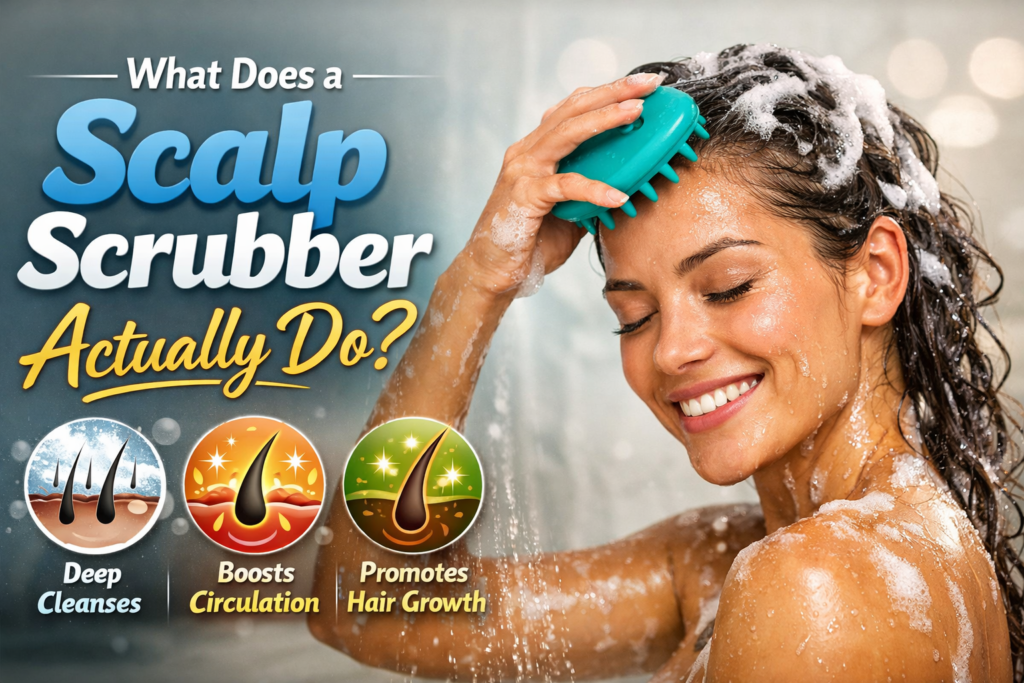
Many people care for their hair but forget about the scalp. The scalp is like the soil for a plant—it needs attention for healthy hair growth. One tool that’s getting popular lately is the scalp scrubber. But what does a scalp scrubber actually do? Is it just another beauty gadget, or does it offer real benefits? Let’s explore how scalp scrubbers work, what you can expect, and if they’re worth adding to your routine.
How A Scalp Scrubber Works
A scalp scrubber is a small tool, usually made of silicone or plastic, designed to massage and clean your scalp. It has soft bristles or teeth that gently move across the skin. When you use it, you’re not only cleaning your scalp, but also stimulating it.
Here’s what happens during use:
- The bristles help remove dead skin cells.
- Oils, dirt, and product buildup are loosened.
- Blood flow increases, which may support hair health.
Most people use a scalp scrubber in the shower, with shampoo. The tool makes it easier to reach places your fingers miss. Some scrubbers are manual, while others vibrate for extra stimulation.
Key Benefits Of Using A Scalp Scrubber
Using a scalp scrubber isn’t just about feeling good. There are several practical benefits for your hair and skin.
- Deep Cleaning: Scrubbers can clean better than fingers alone. They lift debris and buildup, which helps your scalp “breathe.”
- Exfoliation: Regular exfoliation reduces flakiness and prevents dandruff. This is especially helpful for people who use styling products often.
- Stimulation: Gentle massage increases blood flow. Some studies suggest this may help with hair growth by bringing more nutrients to the roots.
- Relaxation: Many users say the massage feels relaxing and reduces stress.
- Better Shampooing: A scrubber spreads shampoo more evenly, so you use less product and get a thorough wash.
One non-obvious insight: scalp scrubbers can also help distribute natural oils. This means less greasy patches and a more balanced scalp.
Who Should Use A Scalp Scrubber?
Scalp scrubbers are safe for most people, but they’re especially helpful for:
- People with oily scalp
- Those with mild dandruff
- Anyone who uses a lot of styling products
- People who want to boost hair growth
However, people with certain conditions like psoriasis or open wounds should be careful. Using a scrubber on sensitive or broken skin can cause irritation.
Scalp Scrubber Vs. Fingertip Cleaning
Many wonder if a scalp scrubber is better than just using your fingers. Let’s compare the two:
| Method | Cleaning Power | Stimulation | Risk of Damage |
|---|---|---|---|
| Fingertips | Moderate | Low | Low |
| Scalp Scrubber | High | Medium-High | Low if used gently |
Scrubbers reach deeper, but you must use them gently. Excessive pressure can scratch or irritate the scalp.
Different Types Of Scalp Scrubbers
There are several types, each with unique features:
| Type | Main Material | Special Feature |
|---|---|---|
| Manual | Silicone | Flexible, easy to clean |
| Electric | Plastic | Vibration, adjustable speed |
| Comb-style | Plastic | Wide teeth, detangling |
Manual silicone scrubbers are most common and gentle. Electric models are pricier but offer extra massage. Comb-style scrubbers help with detangling.
How To Use A Scalp Scrubber Correctly
Getting the best results is about using the tool the right way. Here’s a simple step-by-step guide:
- Wet your hair and apply shampoo.
- Place the scrubber on your scalp.
- Move it in small circles, covering all areas.
- Do not press too hard—gentle pressure is enough.
- Continue for 2-3 minutes.
- Rinse and follow with conditioner.
Some practical tips:
- Clean the scrubber after each use to avoid bacteria buildup.
- Use 1-2 times per week for most people; daily use may be too harsh.
- If you have thick hair, part it to reach the scalp.
One overlooked mistake: some beginners use the scrubber on dry scalp. Always use it with water or shampoo to avoid irritation.
Scalp Scrubber Myths And Facts
Let’s clear up some common misunderstandings:
| Myth | Fact |
|---|---|
| Scrubbers cause hair loss | Gentle use does not damage hair; rough handling can cause breakage |
| Only for dandruff | Useful for all scalp types, not just those with flakes |
| Works instantly | Benefits build over time; regular use is key |
Possible Side Effects And Precautions
Most people experience no side effects if they use a scalp scrubber properly. Still, here are some things to watch for:
- Redness after use, especially if skin is sensitive
- Minor irritation if scrubber is too rough
- Avoid using if you have open wounds, severe dermatitis, or infections
If irritation happens, stop use and consult a dermatologist. If you want more scientific guidance, visit the American Academy of Dermatology.
Frequently Asked Questions
How Often Should I Use A Scalp Scrubber?
Most experts suggest 1-2 times per week. Overuse can irritate your scalp, especially if you scrub too hard.
Can A Scalp Scrubber Help With Hair Growth?
It may help indirectly by improving blood flow and removing buildup. However, it’s not a magic solution for hair loss.
Is A Scalp Scrubber Safe For Curly Hair?
Yes, but be gentle. Use a scrubber with soft, flexible bristles and work in sections to avoid tangling.
Should I Use A Scalp Scrubber With Conditioner?
It’s best used with shampoo. Using it with conditioner can make the tool slippery and less effective.
Can Kids Use A Scalp Scrubber?
Yes, but choose a soft scrubber and supervise use. Avoid if the child has skin conditions or sensitivities.
A scalp scrubber is a simple tool, but it can make a big difference in your hair and scalp health. By cleaning deeper and massaging the skin, it gives benefits that fingers alone can’t offer. Remember, gentle use and regular cleaning are key.
With the right approach, you may notice a fresher scalp and healthier hair over time.